
Source: Lithium sector attracts US$3,4bn investment – herald
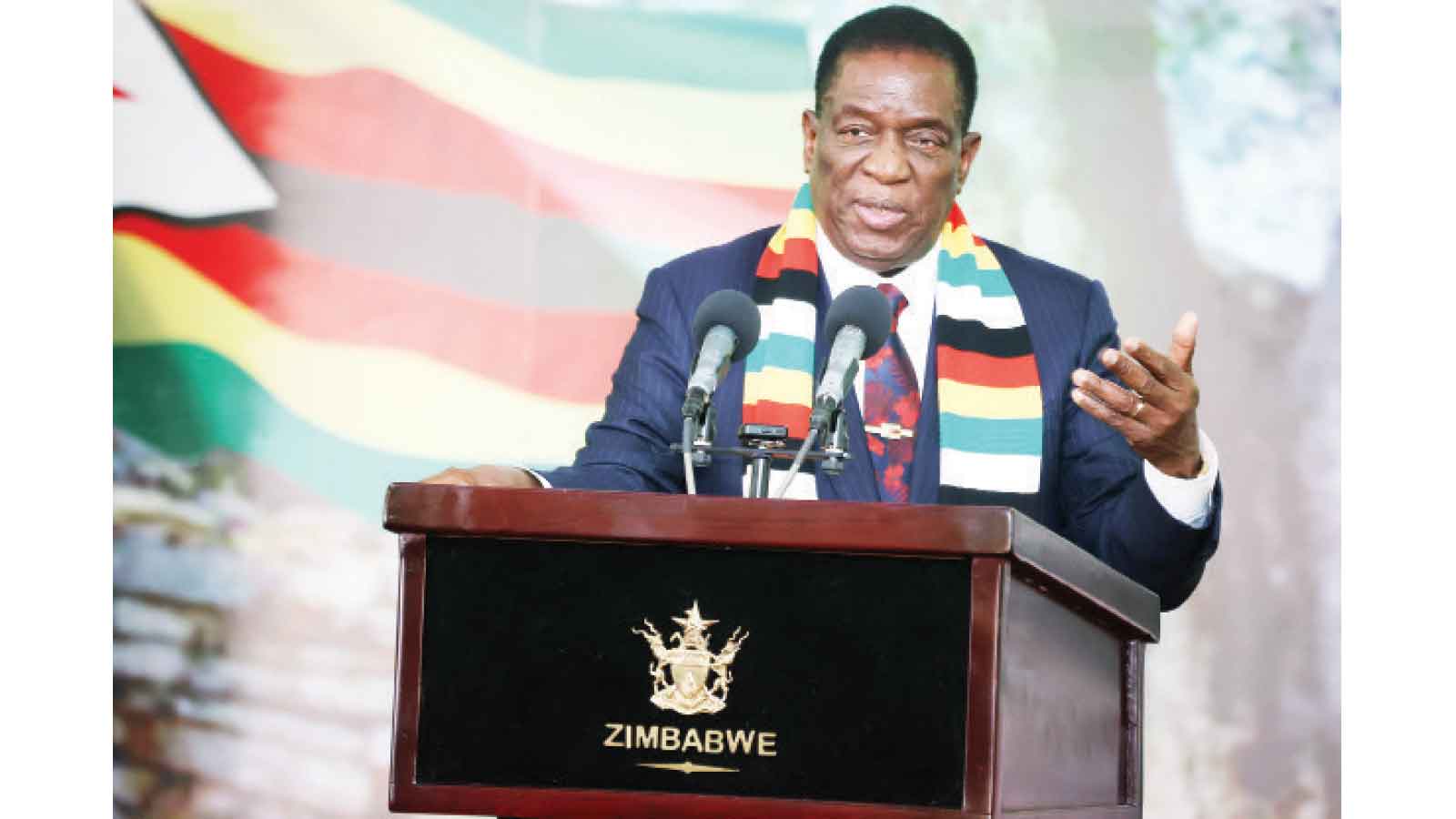 President Mnangagwa
Oliver Kazunga recently in Victoria Falls
ZIMBABWE’S lithium sector has attracted more than US$3,4 billion in investment despite a global price drop, reinforcing confidence in the country’s beneficiation-led mining strategy.
The investment pipeline comprises US$2 billion already deployed and a further US$1,45 billion earmarked for value-addition projects, positioning Zimbabwe to deepen its role in global battery mineral supply chains.
President Mnangagwa has reiterated the need to scale up value addition and beneficiation of minerals, leveraging growing domestic capacity in science, technology and innovation.
The surge in investment comes against the backdrop of a global correction in lithium markets, where prices plunged from a peak of about US$86 000 per tonne in 2022 to around US$14 300, following the slowdown in electric vehicle demand growth.
Despite this volatility, official Minerals Marketing Corporation of Zimbabwe (MMCZ) data shows the sector is expanding, with lithium sales generating US$178,64 million in the first quarter of this year, a 106 percent increase from US$84,19 million recorded in the same period last year.
Sales volumes also rose by two percent to 240 826 tonnes, from 224 610 tonnes during the comparative period.
Speaking at the Chamber of Mines of Zimbabwe (CoMZ) annual conference last week, Lithium Producers Association of Zimbabwe chairman Mr Innocent Rukweza said the sector remained firmly committed to Zimbabwe despite difficult market conditions.
“So together we are talking about US$3,4 billion that has been on the table, what has been achieved US$2 billion and what is coming US$1,45 billion.
“The number can easily be US$4 billion or US$5 billion, but this is the level of commitment that we are putting through,” he said.
The investment drive follows a turbulent cycle in the global lithium market, which saw a rapid price surge in 2022 driven by electric vehicle demand, followed by a sharp downturn that forced producers worldwide to adjust operations.
Mr Rukweza said the sector experienced unprecedented growth during the 2022 lithium boom.
“That’s when we saw a huge influx of people coming in and the prices reached a high of US$86 000 — that was our peak price,” he said.
The soaring prices triggered a wave of investment into Zimbabwe’s lithium sector as global investors sought exposure to battery minerals critical for electric vehicles and energy storage systems.
However, the subsequent price collapse forced producers to scale back operations, delay projects and adjust workforce levels.
“We got to a point where we had to retrench, there were project delays and I am very happy that the panellists that came through here highlighted that and we were in sync, that we had a lot of project delays, we had to lay off people and we had a low price of US$14 300 up from US$86 000,” he said.
As part of efforts toward promoting value addition and beneficiation, the Government in February this year suspended the export of lithium concentrates and other raw minerals as part of a broader strategy to enhance accountability, promote beneficiation and strengthen value retention across the mining sector.
Following the export ban, authorities introduced a quota system for lithium producers to export concentrate under strict conditions, designed to safeguard production continuity while supporting the transition to full beneficiation.
Mines and Mining Development Minister Dr Polite Kambamura has indicated that the export of lithium concentrates will be phased out entirely by January 2027, by which time all producers are expected to have established processing facilities.
Despite the challenges, producers have continued to invest in expansion and downstream processing.
“As an industry, I think we are an infant, we are taking baby steps but when you look at the numbers or the impact that we have put through, I have excluded the exploration that went in there.
“I have excluded the CSR (Corporate Social Responsibility) efforts that the lithium producers have gone through and I am just saying so far on the projects that are completed, we’re putting US$2 billion,” said Mr Rukweza.
Zimbabwe currently has five major lithium producers — Prospect Lithium Zimbabwe (PLZ), Gwanda Lithium Company, Kamativi Mining Company (KMC), Bikita Minerals and Maxmind, which owns Sabi Star Lithium Mine in Buhera, Manicaland Province, collectively employing more than 5 000 people.
Other lithium ventures presently under development include Sandawana in Mberengwa, Midlands Province—and Premier African Minerals in Insiza Diistrict, Matabeleland South Province.
Mr Rukweza said the industry remained committed to supporting Government’s beneficiation agenda through the establishment of lithium sulphate plants, concentrators and mineral recovery facilities.
“We remain as an industry committed to the story of lithium and we want to make it better than what it is as a collective and as you can see we have US$1,45 billion worth of projects that are coming online and these are earmarked for nothing else but for beneficiation in compliance with Government policy.”
The planned investments are expected to deepen local value addition, create employment opportunities and boost foreign currency earnings through exports of processed minerals.
Looking ahead, Mr Rukweza said the sector was poised for strong growth, with projected turnover reaching about US$3,2 billion by 2030 under beneficiation-driven production targets.
“Up to 2030 according to our projections the lithium industry will be registering a turnover, a peak turnover based on lithium sulphate in compliance with the beneficiation policy in NDS2, US$3,2 billion,” he said.
Zimbabwe, which holds some of Africa’s largest lithium reserves and ranks among the world’s key producers, is positioning the mineral as a central pillar of its mining-led industrialisation and energy transition strategy.
Production is projected to reach 344 000 tonnes of lithium sulphate at peak output, strengthening Zimbabwe’s ambition to become a major global hub for battery mineral processing.
The mining sector remains a key pillar of the economy, contributing over 12 percent to GDP and accounting for more than 80 percent of export earnings.
The post Lithium sector attracts US$3,4bn investment appeared first on Zimbabwe Situation.