
Source: Massive river restoration programme begins – herald
Theseus Mauruki Shambare
THE largest river restoration programme in Zimbabwe’s history began last week with the selection of specialist companies to undertake an emergency nationwide rehabilitation of rivers severely damaged by years of legal and illegal alluvial mining.
The programme follows the gazetting of Statutory Instrument (SI) 91 of 2026 — the Civil Protection (Declaration of State of Disaster: Emergency Riverine Ecosystems Rehabilitation) Notice, 2026 — which declares a State of Disaster over Zimbabwe’s riverine ecosystems and triggers an unprecedented rehabilitation exercise across affected waterways.
A 90-day suspension of mining, farming and other activities within heavily degraded river systems has already taken effect as the authorities begin implementing emergency measures aimed at halting further environmental damage and restoring critical water ecosystems.
The intervention comes after President Mnangagwa declared 17 major rivers disaster zones, placing them under a special legal framework that provides for centralised rehabilitation, enhanced environmental protection and strict enforcement measures.
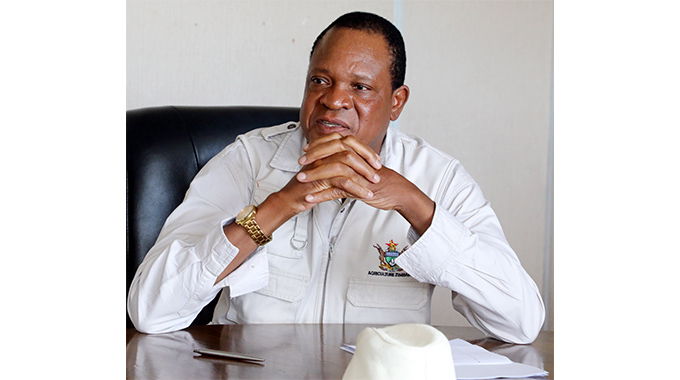
In an interview with The Sunday Mail, Agriculture, Mechanisation and Water Resources Development Minister Dr Anxious Masuka said the Government was now activating an integrated legal and operational framework designed to stop further degradation while restoring damaged ecosystems.
“Two statutory instruments — SI 91 on riverine rehabilitation following the declaration by the President, Dr Emmerson Mnangagwa, of a State of Disaster caused by legal and illegal alluvial mining in various river systems and also Statutory Instrument 92, the polluter-pays principle — must be read in conjunction with Statutory Instrument 188 of 2024 that bans alluvial mining,” said Dr Masuka.
“So, the President has taken this bold approach to ensure that we stop alluvial mining, but also we have a systematic rehabilitation and restoration of ecosystems.”
The Government, Dr Masuka said, would immediately begin identifying and engaging technically competent companies to undertake rehabilitation works under the supervision of the Inter-Ministerial Committee on Rehabilitation of Degraded Riverine Ecosystems.
“And now we are going to put in motion immediately select companies that have capacity, competence to be able to rehabilitate these degraded systems, but also ensuring that in future any company that causes such degradation is held accountable through the polluter-pays principle,” he said.
The rehabilitation programme is expected to include the removal of illegal mining infrastructure, restoration of damaged river channels, desiltation of waterways, stabilisation of riverbanks, rehabilitation of wetlands and revegetation of riparian zones to restore natural ecological functions.
Under SI 91 of 2026, the Government formally declared that “a state of disaster exists throughout Zimbabwe” following extensive environmental destruction caused by alluvial mining, riverbed disturbance, siltation and the diversion of natural watercourses.
The SI establishes a national emergency rehabilitation programme anchored in environmental protection laws and constitutional provisions guaranteeing citizens the right to a safe and healthy environment.
It empowers the Inter-Ministerial Committee on Riverine Ecosystems Rehabilitation to coordinate and enforce restoration works across affected river systems, while key institutions such as the Environmental Management Agency (EMA) and the Zimbabwe National Water Authority (ZINWA) will spearhead implementation alongside other technical Government agencies.
The committee will oversee rehabilitation contracts, monitor compliance and coordinate restoration activities across the country.
The emergency measures also prohibit mining and farming activities within designated river systems during the intervention period.
Only authorised rehabilitation contractors operating under mineral recovery permits will be allowed to undertake restoration work, with any recovered minerals required to be declared to the Ministry of Mines and Mining Development within seven days.
Complementing the rehabilitation programme is Statutory Instrument 92 of 2026, the Environmental Management (Riverine Protection and Polluter-Pays Enforcement) Regulations, which introduces strict liability provisions requiring offenders to bear the full cost of repairing environmental damage.
The regulations firmly entrench the polluter-pays principle, making both individuals and companies financially responsible for restoring ecosystems damaged through their activities.
Water security threat
Permanent Secretary in the Ministry of Agriculture, Mechanisation and Water Resources Development Professor Obert Jiri said the intervention was necessary because river degradation had evolved into a serious national water security threat.
“The bad, the ugly and the beast refers to the scale of environmental degradation that we are now confronting in our river systems as a country,” he said.
“What started as isolated alluvial mining disturbances has now evolved into a national water security concern requiring urgent intervention at the highest level.”
Prof Jiri said widespread destruction of river ecosystems was accelerating siltation, altering natural river courses and damaging strategic catchments that support irrigation schemes, urban water supplies and critical infrastructure.
He warned that continued degradation could undermine agricultural production, reduce water storage capacity in dams, increase water treatment costs, threaten fisheries and compromise hydro-infrastructure essential for economic development.
“The beast is the long-term threat this now poses to national food security, irrigation development, urban water supplies, hydro-infrastructure and ultimately economic productivity,” he said.
He added that the Government had adopted a whole-of-Government approach involving EMA, ZINWA, local authorities, law-enforcement agencies and provincial structures operating under a single coordinated rehabilitation framework.
“The 90-day intervention period is meant to stabilise the situation, halt further degradation and begin systematic restoration of damaged ecosystems,” he said.
“This includes removal of illegal mining infrastructure, restoration of river channels, revegetation of riparian zones and strengthening monitoring and compliance systems.”
The rehabilitation programme forms part of a broader national resilience strategy linked to irrigation expansion, rural industrialisation, fisheries development, climate adaptation and the attainment of Vision 2030 goals.
“The Government position is very clear: Economic activities must never compromise environmental sustainability and national water security,” he said.
“This is now a national responsibility requiring cooperation from communities, traditional leaders, miners, local authorities and all stakeholders.”
The intervention targets some of the country’s most important river systems, including Mazowe, Save, Sanyati, Mupfure, Umzingwane, Insiza and Mutare rivers, which have been affected by years of legal and illegal alluvial mining activities.
Affected rivers include Mazowe and Murowodzi in Mashonaland Central; Mazowe and Save in Mashonaland East; Angwa, Sanyati, Munyati and Mupfure in Mashonaland West; Umzingwane and Insiza in Matabeleland South; Manzimudaka, Mutebekwi, Sanyati and Mtshingwe in Midlands; and Mutare, Haroni and Nyamukwarara rivers in Manicaland.
The post Massive river restoration programme begins appeared first on Zimbabwe Situation.